Black widows and brown widows both live in South Orange County. Learn to tell them apart, where they hide, and when to call for black widow spider control.
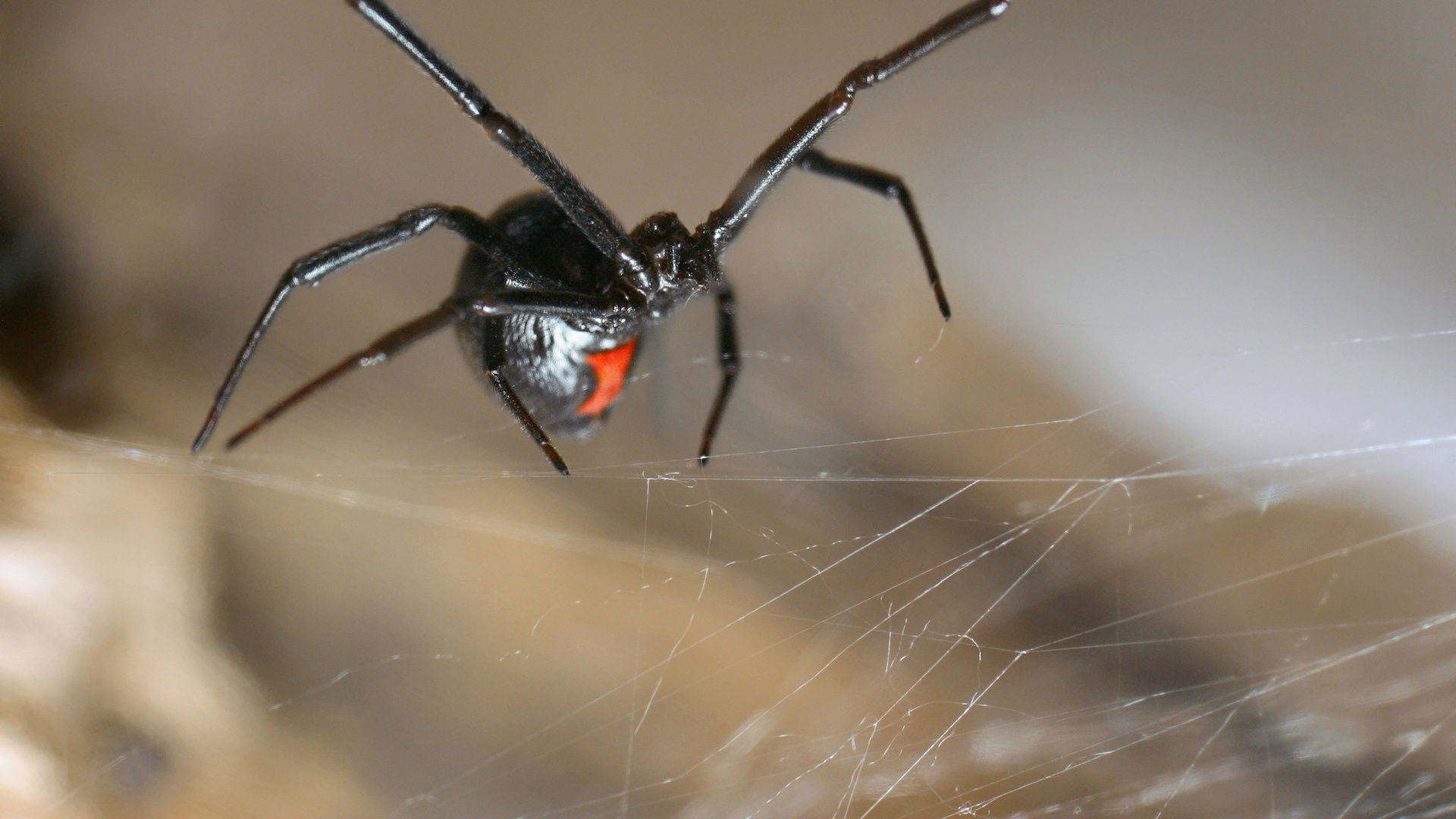
Most people who call Oso Pest Control about widows have already been living with them for a while without knowing it. The spider they found under the patio chair or behind a storage shelf wasn’t the first one; it was just the first one they noticed. Both black widow and brown widow spiders live in South Orange County, and the foothill and coastal communities, where they build their webs in remote corners, away from humans, but never too far. These days, homeowners across the region are more likely to find a brown widow than a black one. But what matters for Oso’s spider control services is what type of widow it is: is it a black widow or a brown widow?
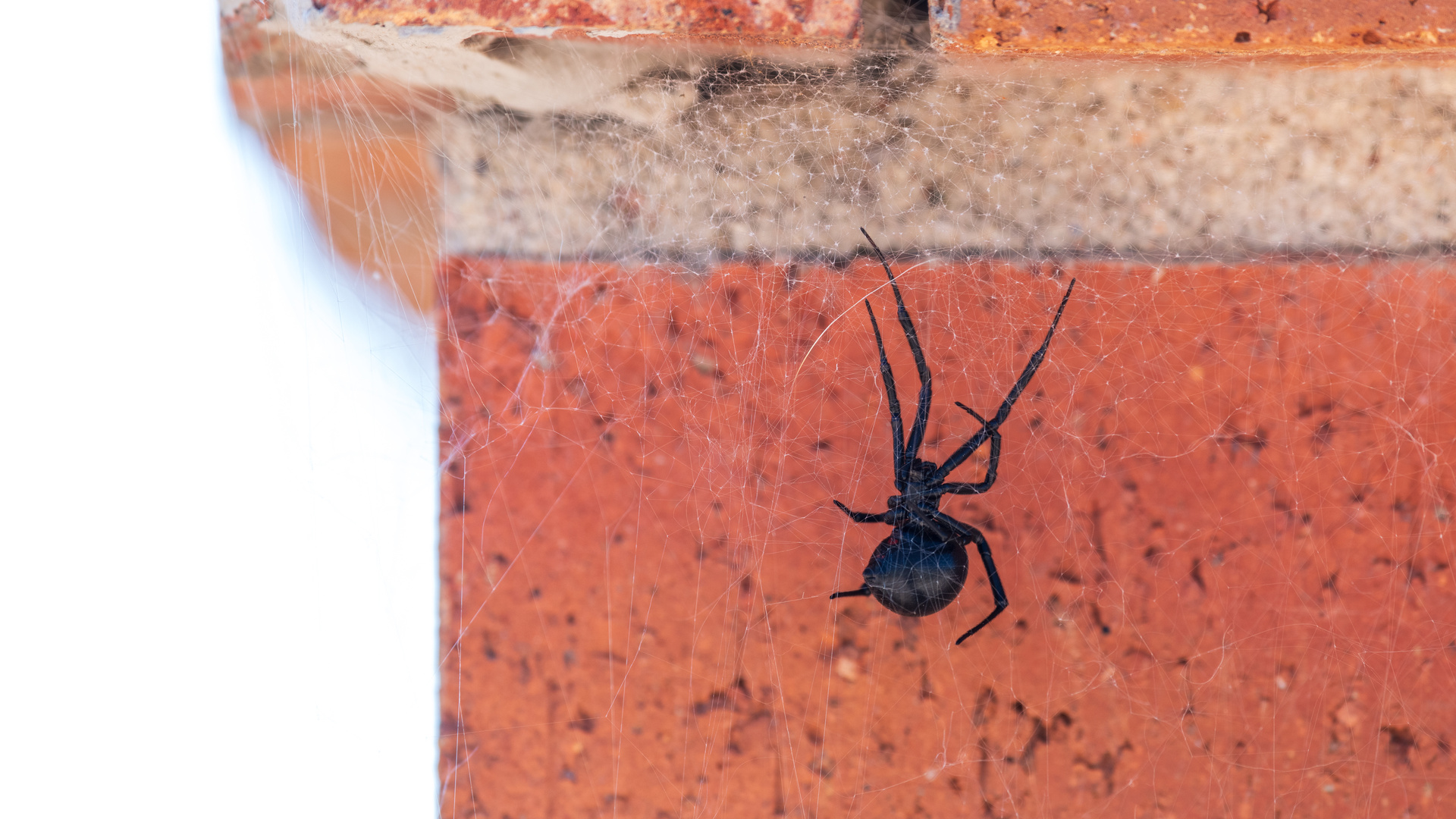
Female black widows are the reason for their toxic reputation; males are smaller, lighter in color, and rarely the ones homeowners run into. The female runs about 1.5 inches including leg span, with a glossy black abdomen that looks almost wet. The hourglass marking sits on the underside of the abdomen, typically bright red, sometimes orange-red on older females. You won’t see it unless you get a look at her belly, which isn’t always practical when she’s hanging in a web.
A few things that make a positive ID faster:
The web itself is a reliable tell even without seeing the spider. Black widow webs are messy by design, nothing like the round, spoke-style webs most people picture. They’re built close to the ground in dark corners, and the silk has a resistance to it when you sweep through with a stick. That combination of location, structure, and texture narrows it down fast.
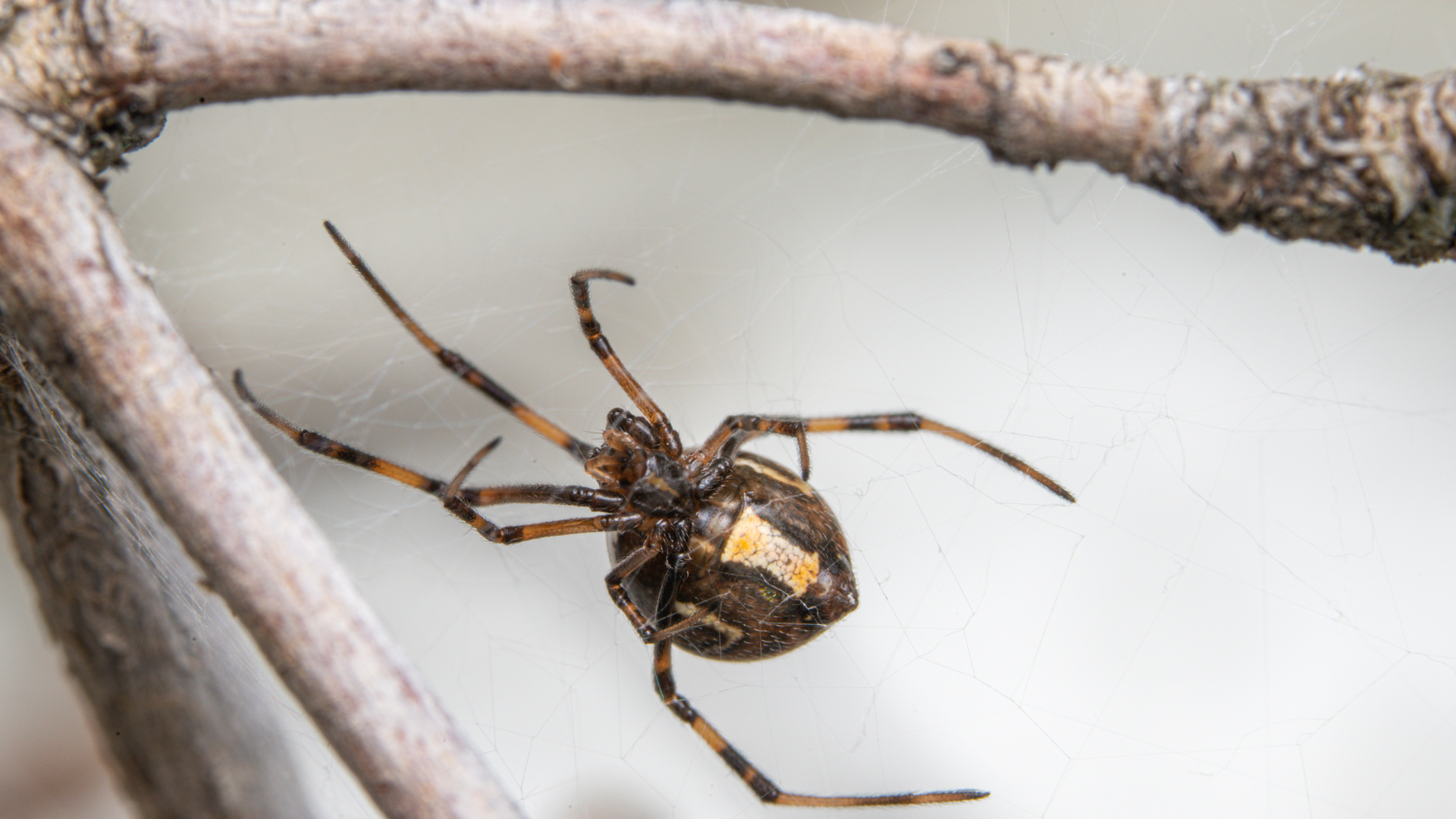
Something most homeowners don’t expect: UC Riverside researchers have found that brown widows may be supplanting black widows across urban Southern California. The coloring runs from tan to dark brown with orange or yellow markings along the abdomen. The hourglass underneath is orange rather than red. Younger females can look pale and banded, and that variation makes it harder to make a confident call from coloring alone.
One reliable field tell is the egg sac. Black widow egg sacs are smooth, tan or cream colored. Brown widow egg sacs have small spiky projections across the surface, similar in shape to a tiny sea mine. That texture is unmistakable once you’ve seen it. Brown widows also nest higher off the ground than black widows, more often turning up in patio furniture, planter pots, and garage walls at chest or eye height rather than floor level.
Females of both species spend almost their entire adult lives within a few inches of their web. They don’t roam for prey or explore a space; they build, stay close, and wait. Males move around more, especially in late summer when they’re searching for mates. That’s when you’re more likely to find one in an unexpected spot, inside a shoe left outside, under a folded tarp, or behind something that sits against a wall.
Widow activity in South OC picks up from April through October, peaking in summer when insects are most active. That timing lines up with when families spend more time in garages and outdoor spaces, which is part of why late summer generates more calls than any other stretch of the year.
The web is usually what brings on the first contact. Widow silk is built entirely for grip, and insects that brush into it rarely make it out. Neither species is aggressive toward people; a bite almost always happens when a spider gets trapped against skin, when someone reaches into a spot without looking or puts on a glove that's been sitting out.
Garages account for more widow calls than any other spot in South OC. Widows move into undisturbed corners near floor level, behind stored boxes, and inside containers that haven’t been opened in months. After garages, outdoor furniture pushed against exterior walls comes up most; the undersides of plastic chairs and table frames are nearly always where the web is built, not on top where you’d look first.
Four spots that inspection almost always turn up in South OC homes:
Every one of those spots sits undisturbed for weeks and has some kind of overhead cover or lip. Widows aren't using the same entry points as ants or roaches.They prefer non-open spaces and seclusion.
Yes, and black widow spider control is something we handle regularly across South OC. Most of what people try on their own misses how widows spend their time. A consumer spray applied to a visible spider kills what you can see, but widows stay close to their web and rarely cross a treated surface on their own. A product that keeps working after it dries, applied to the right spots, is the core of it; widows pick it up crossing a treated surface even without direct contact. Physically pulling down the webs and egg sacs handles the rest of the population.
One egg sac can hold 200 or more eggs. Leaving them in place after treating the adults means you’re back to the same problem weeks later. Our spider control service includes full web and egg sac removal at every visit. For a broader look at the spider species we treat across South OC, the Orange County spider guide covers the full range of species we treat in the region.
If you’ve found widows more than once in the same spots, or you have kids or pets using the yard regularly, call us. A single spider in a corner you rarely visit is one situation. An established presence in a garage or patio area you’re in every day is a different one. We’re at 949-818-1891 and on our contact page. Our residential pest control plans cover widow treatment as part of ongoing service, and we return between scheduled visits if pests come back before the next one.
We cover coastal and inland South Orange County:
Schedule an inspection or call us. Our local team is here to help.