Ants in your yard? They may be farming aphids and mealybugs on your plants. Learn how the ant-aphid relationship works and how Oso can stop it.
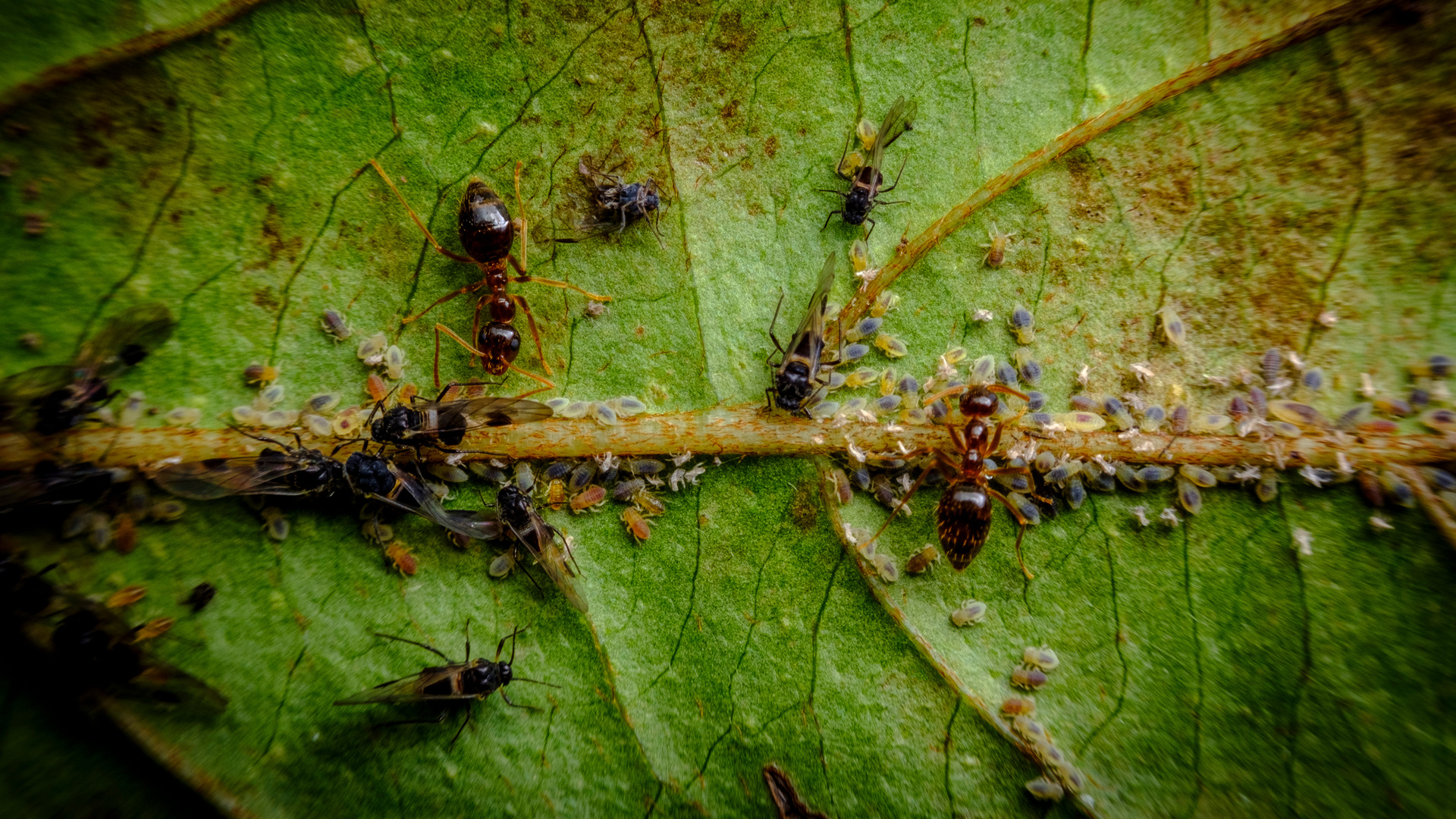
Ants follow garden plants because of aphids and mealybugs, small insects that feed on plant sap and excrete a sticky residue called honeydew. Ants treat honeydew as a food source and actively protect the insects producing it, moving aphid colonies to healthier parts of the plant and driving off insects like ladybugs that would otherwise keep the population in check. Breaking the cycle requires treating both the ant colony and the aphid population at the same time. Addressing only one allows the other to reset the problem within days. Can you add whiteflies & scale as honeydew producers?
If you've noticed ants crawling up your garden plants every summer, they're probably not there by accident.
The ant-aphid relationship plays out on garden plants, shrubs, and trees across South Orange County every summer. Ants follow food. The plants in your garden are providing it.
Removing the ants doesn't remove what's drawing them there. The food source stays, the colony adjusts, and within days the trails are back. Understanding the full picture is the only way to actually break it.
Sap-feeding insects like aphids and mealybugs attach to the stems, leaves, and new growth of plants and feed on the sugary fluid inside. As they feed, they excrete a sticky residue called honeydew. Ants treat it as a food source worth defending.
Ants actively tend aphids and mealybugs on plants. They move colonies to healthier parts of the plant, drive off natural predators like ladybugs and lacewings that would otherwise keep populations in check.
In some cases, they carry plant pests to new plants entirely when their current host starts to decline. It's a working relationship that benefits both insects at the plant's expense.
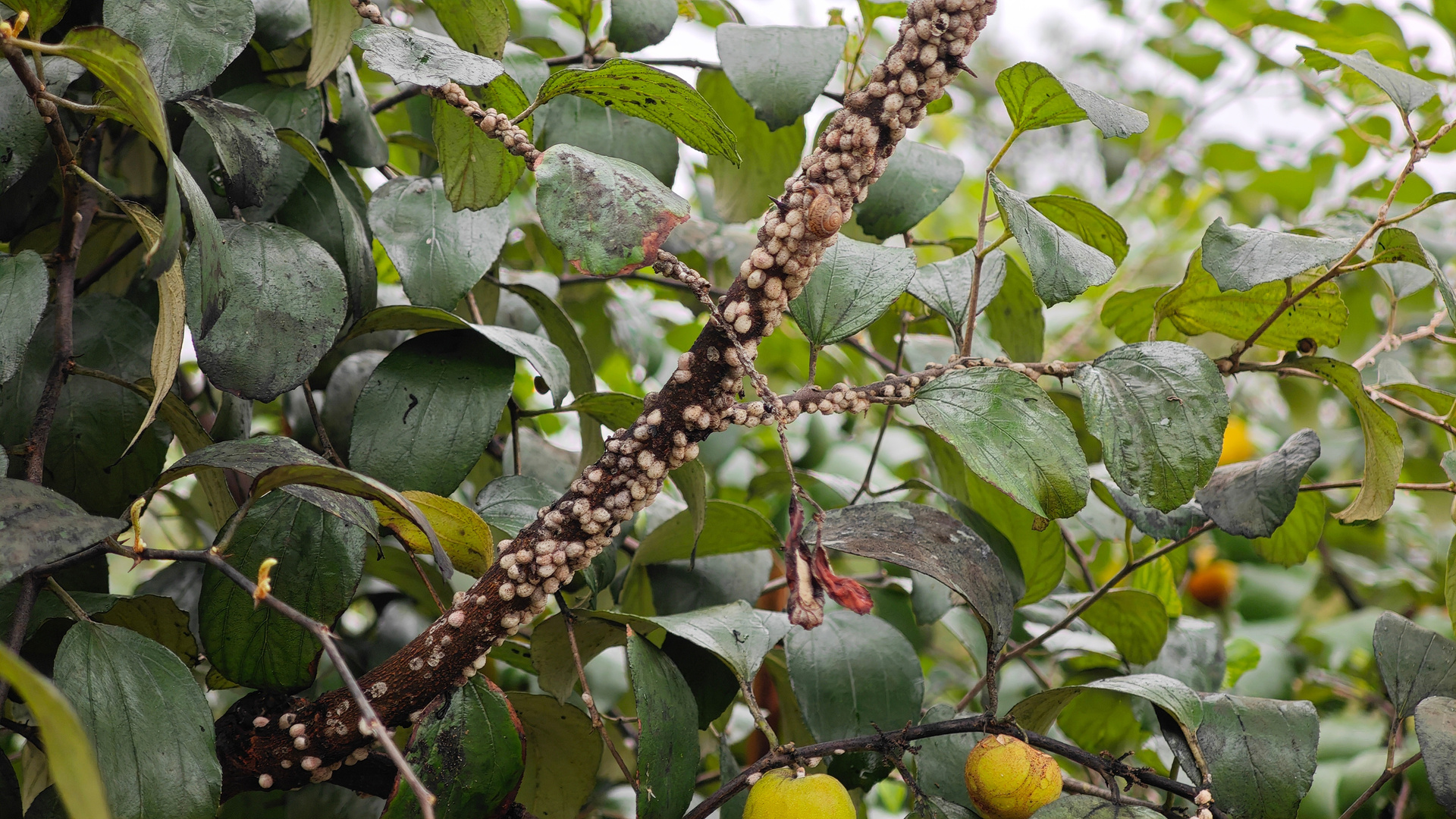
Mealybugs produce honeydew as reliably as aphids do. Ant trails hit both pests on the same plant for exactly that reason. The ants aren't being indiscriminate. They follow the resource, and both insects provide it.
On garden plants across South Orange County, where warm summers keep plant pests active from late spring well into fall, this cycle runs longer and harder than most homeowners expect.
By the time the ant activity becomes obvious, the plant pest population underneath it is usually well established and actively spreading.
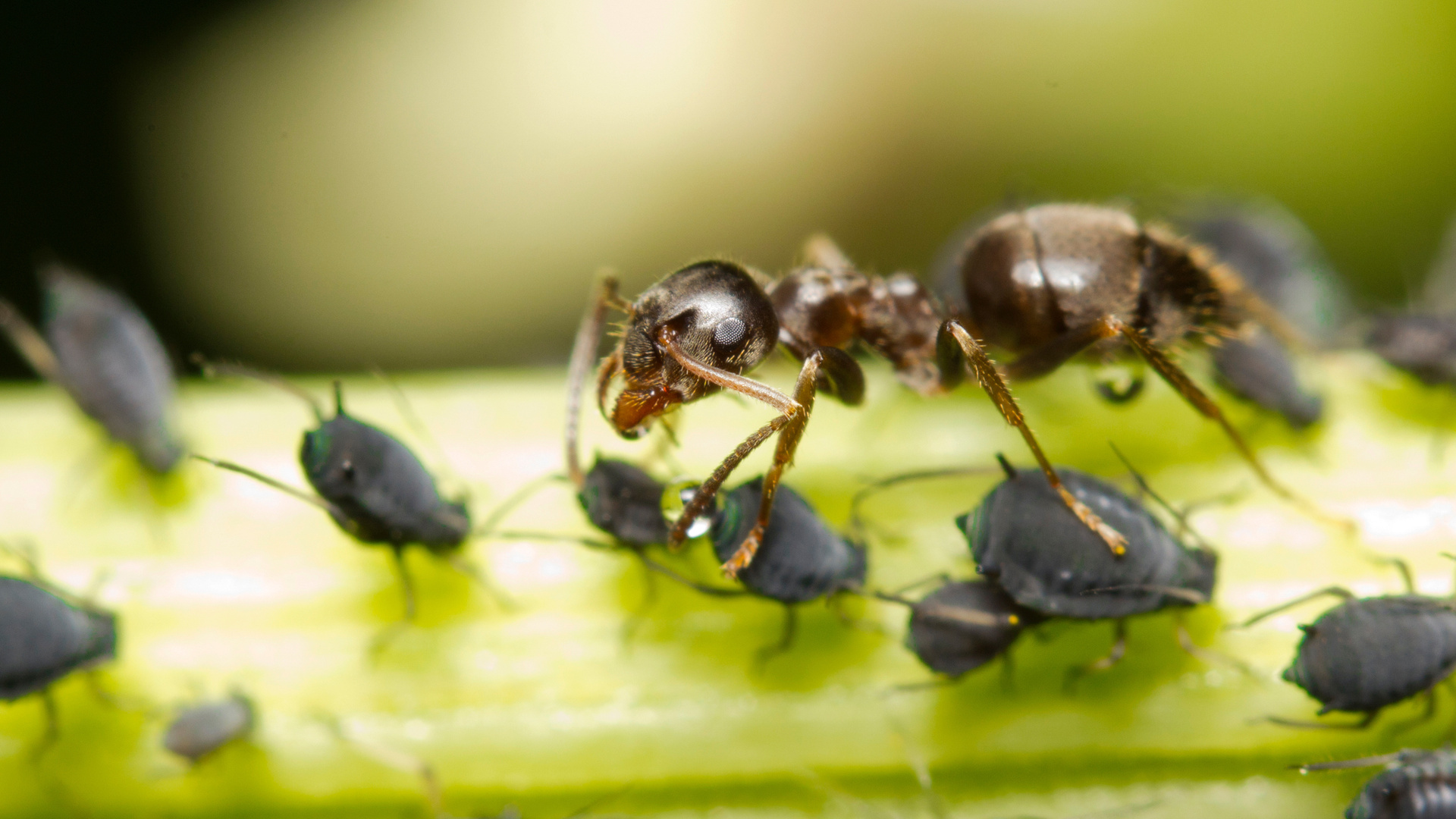
Consistent ant traffic on plants is the clearest sign something is going on, particularly when there's no obvious food source nearby. If ants are climbing your roses, citrus, garden shrubs, or anything with soft new growth, look closer at the stems and undersides of leaves.
Aphids are small and often green or tan, blending into stems and the undersides of leaves until the population is large enough to see clearly. Mealybugs leave a white, cottony residue that's easier to spot once you know what to look for. Neither pest makes much noise about being there.
South Orange County's mild climate and irrigated garden plants give both insects ideal conditions to build up fast. Citrus and roses are reliable hosts. So are hibiscus, bird of paradise, and most garden shrubs. If you're gardening in South OC, chances are the plants drawing ant attention are already on that list.
Other signs that the relationship is already active:
● Sticky residue on leaves or on hard surfaces directly beneath the plant
● Black sooty mold growing on leaves, which feeds on honeydew deposits
● Curling, yellowing, or distorted new growth from sustained aphid feeding
● Ant activity that spikes again shortly after you've sprayed the plant
That last pattern is the most telling. Treating aphids or mealybugs with a contact spray while leaving the ant colony untreated almost always leads to reinfestation.
The ants locate new plant pests and reintroduce them to the same plants within days. We see this cycle repeat regularly on properties in South Orange County where the plant problem gets addressed without anyone touching the colony behind it.
The garden is also only part of the concern. Argentine ants, which dominate most of South Orange County, build massive interconnected colonies that forage across wide areas. A colony tending aphids on your garden trees in July is running the same trails that eventually lead into your kitchen in August.
Our residential pest control service treats the colony and knocks back the aphid population at the same time.
Most homeowners go through two or three rounds of DIY treatment before realizing it isn't holding. A horticultural spray knocks back the aphid population. A bait station slows the foraging.
Neither one interrupts the relationship between the two insects, and neither reaches the colony sustaining it. The ants wait it out, regroup on a neighboring plant, and start the cycle over.
When we treat for ants connected to a plant pest situation, we're not treating only what's visible. We target the colony and the conditions drawing foragers to that part of the yard. If aphids or mealybugs are active on your plants, that gets factored into the approach.
Cutting off the honeydew source is part of what keeps the ants from re-establishing. We also look at where the colony is likely originating, which in South OC often means tracing activity back through adjacent landscaping or open space nearby.
What that process typically includes:
● Colony-targeting bait that worker ants carry back and share with the colony
● Treatment around the outside edges of your home and in the spots where ants hide and rest, around affected plants and your home
● Direct assessment of active aphid or mealybug infestations on your plants
● Scheduled follow-up to confirm the colony hasn't re-established from adjacent properties
Argentine ant colonies in South Orange County often stretch across several properties, so one treatment usually doesn't reach all of it. That's why every plan includes a follow-up visit from the start, ensuring that the ants can’t rebuild their colonies and infest your home again.
The honeydew is what brings ants to your garden, and as long as aphids or mealybugs are active on your plants, that food source isn't going anywhere. We've worked through this exact cycle on properties across South Orange County all summer long and know how to shut it down from the colony up.
Call us at 949-818-1891 to schedule a visit.
Schedule an inspection or call us. Our local team is here to help.