Carpet beetles damage fabric, rugs, and stored items. Learn how to ID them and get professional carpet beetle treatment in South Orange County.
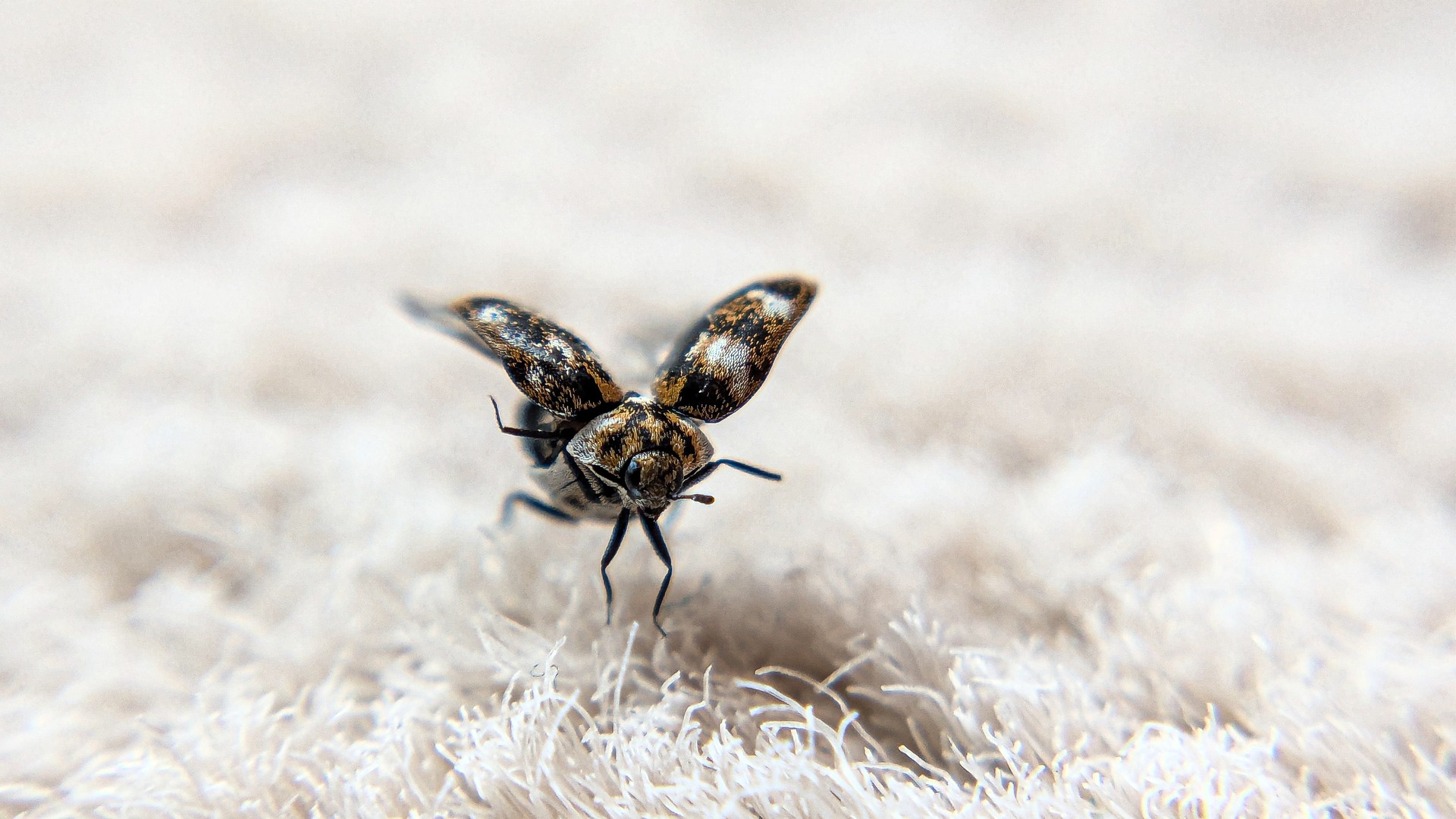
Most of the calls we get about carpet beetles start the same way: someone notices irregular holes in a wool sweater or a rug, blames moths, and the damage keeps spreading. Carpet beetles are the more likely cause in South Orange County, and they're common enough in coastal and foothill homes here that a wrong ID can mean a full season of continued damage. The larvae feed in dark, undisturbed areas and the adults are usually outdoors. An infestation can run for months before anyone connects the damage to the source.
Adults are roughly the size of a sesame seed. They turn up near windows and light sources far more than near the fabric they're responsible for damaging, because adults feed outdoors on pollen and are drawn inside by light. Most homeowners find them on window sills in spring or early summer without connecting them to the damage they'll find later in a closet or storage bin.
Larvae are responsible for the visible damage; adults don't feed on fabric at all. The two look nothing alike. A carpet beetle larva is carrot-shaped, covered in bristly hairs, and tan to dark brown in color. They stay in dark, undisturbed spots and move slowly. A few things to look for:
Cast skins are hollow shells left behind as larvae grow, and they accumulate in the spots larvae feed. Finding them in a closet or along a baseboard confirms an active infestation even if you haven't located the larvae yet.
Carpet beetles are active well before most people notice them. By the time the damage is visible, a full generation has usually cycled through. In South Orange County homes, the most common discovery is damage in items pulled from storage: a sweater packed away in the fall, a wool blanket from the linen closet, a rug that sat undisturbed under furniture for months.
Moth damage and carpet beetle damage look similar at first glance, but the pattern is different. Moths eat through fabric, leaving clean-edged holes. Carpet beetle larvae scrape surface fibers, producing irregular thinning or fuzzy-edged patches. Other signs:
Adults spend most of their time outdoors and come inside one of two ways: through openings in the home, or on objects brought in from outside. South OC's mild climate means adults are active from late spring through early fall, and homes near gardens or flowering plants see more pressure than those with less outdoor vegetation close to the structure.
Infestations that go undetected longest usually trace back to a specific entry event rather than gradual spread. The ones we see most in our service areas:
Once eggs are laid inside, larvae develop in the dark over months. The infestation is well established before the first visible damage appears.
How much damage an infestation causes depends almost entirely on how long it runs before it's caught. A single generation feeding through a stored wool blanket is a manageable problem. A multi-generational infestation in a closet full of natural-fiber clothing is harder to recover from; by that point, some items can't be saved. In South OC homes, stored clothing and area rugs suffer the most damage because both tend to sit undisturbed long enough for larvae to complete a full feeding cycle.
Synthetic fabrics are largely safe; the damage goes almost entirely to animal-based materials. What's most at risk in a typical South OC home:
Anything stored in sealed plastic bins is largely protected. Cardboard boxes and open shelving provide no protection.
Consumer sprays applied to visible larvae cover what's already in the open, but carpet beetles don't stay in the open. Disturbed larvae move deeper into fabric, along baseboards, and into wall voids (the hollow spaces inside your walls). The materials most at risk are the ones a surface spray can't reach. Our residential pest control service covers the full interior for carpet beetle treatment: baseboards, closets, wall voids, and anywhere larvae are active.
Working through a carpet beetle infestation means reaching the actual feeding sites. Larvae aren't on the surfaces; they're in the dark spots behind and beneath. Our treatment process:
For homeowners unsure whether the damage is from carpet beetles or silverfish, our silverfish page covers how to tell them apart; both damage similar materials and are common in South OC homes.
Found cast skins, saw the damage, or spotted small beetles near your windows this spring? The infestation is further along than what you can see. Call us at 949-818-1891 or reach us through our contact page. We cover coastal and inland South Orange County:

Schedule an inspection or call us. Our local team is here to help.