Bird mites in your house? Learn how to spot an infestation, treat bites, and stop mites for good with Oso Pest Control, serving South Orange County.
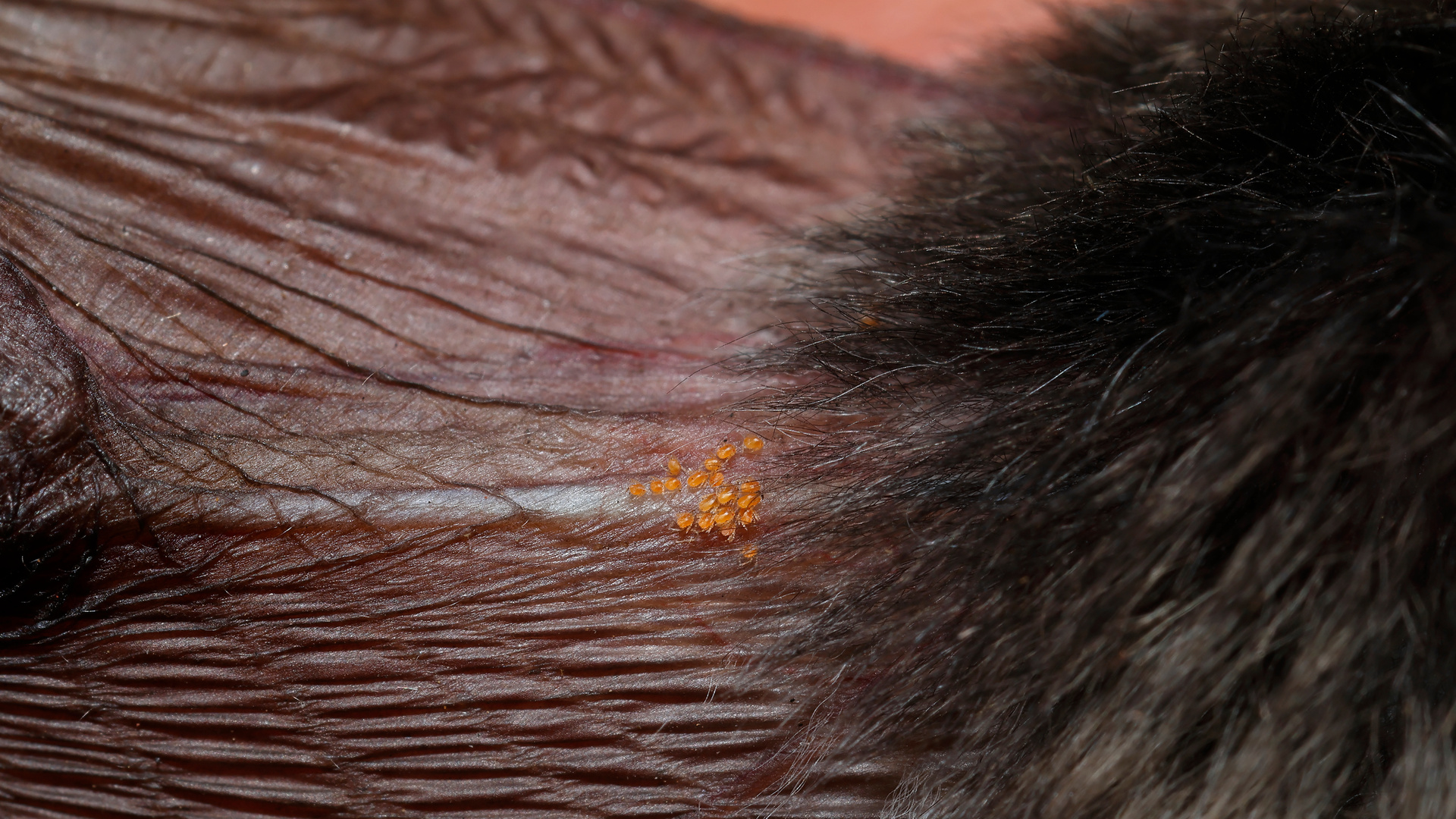
You likely have bird mites if you're seeing small, itchy red bumps in clusters on your neck or arms with no clear cause, especially if a bird's nest nearby recently went quiet. The bites tend to show up first near a window or attic vent, since that's the path the mites travel once their nest empties. Unlike bed bugs, the bites don't cluster near your bed, and unlike fleas, there's usually no pet in the picture. If the timing lines up with a nest disappearing from your roof or porch in the past few weeks, that's the clearest sign you're dealing with bird mites rather than another biting pest.
If you've found bird mites in your house after a nest disappeared from the porch, roof overhang, or attic vent, you're dealing with one of the most overlooked pest problems in South Orange County.
These mites don't start in your home. They start in a bird's nest, and once that nest is empty, hundreds of them go looking for a new host. It's a search we hear a lot this time of year, right after the nest next door or on the roof edge went quiet.
We handle these calls across South Orange County every season. The pattern is almost always the same, especially in neighborhoods with tile roofs and roof overhangs that local bird species favor for nesting. You can learn more about our team on our About page.
Smaller than a poppy seed, a bird mite is easy to miss until it's already indoors. They feed on nesting birds, commonly pigeons and swallows, that build directly on the tile roofs and roof overhangs common throughout South Orange County.
They're barely visible without a magnifying glass. That's part of why homeowners rarely spot them before they've already spread indoors. As long as the nest is active, the mites stay put and feed on the birds themselves. The trouble starts the moment the birds leave and the mites go looking for their next meal.
Without a host, most bird mites survive only a couple of weeks. That's good news: once the nest and any remaining mites are gone, the problem tends to resolve on its own instead of lingering for months.
Once a nest empties, whether the chicks leave the nest or the birds move on, the mites lose their food source in a matter of days. They don't wait around. Mites from a bird nest travel fast, moving through vents and attic gaps to find a new host, and a house sitting a few feet away is the easiest option available.
This is why sightings tend to spike right after nesting season winds down, which in South Orange County usually falls in late summer, once the last nests of the year have emptied.
A bird mite infestation rarely announces itself the way other pests do. We usually hear about it first as itching around the neck or arms, long before the homeowner ever sees an actual mite. If you've had a nest nearby in the past few weeks and now you're dealing with unexplained bites indoors, that timing is the biggest clue. A few other signs worth checking for:
None of these signs are exclusive to bird mites on their own, but together, especially with a recently vacated nest nearby, they're a strong pattern.
Bird mite bites look similar to bites from bed bugs or fleas. That's why they're so often misdiagnosed. The difference is usually location and timing. Bird mite bites tend to cluster on exposed skin, like the neck and arms, and show up in waves tied to a nearby nest, rather than appearing near a bed or a pet.
They're uncomfortable, but they're not dangerous, and the itching typically fades within a few days once the mites are gone and the source is addressed. Scratching too much can occasionally lead to skin irritation on its own, so it's worth resisting the urge as much as possible while things get sorted out.
Knowing how to get rid of bird mites starts with finding the nest, not just treating the bites. Vacuuming affected rooms and washing bedding on high heat knocks down the mites you're dealing with right now.
Sealing the obvious gaps helps too, but none of that stops new mites from arriving if the nest is still there or was only recently vacated. Treating the symptoms without addressing the source is the most common mistake we see homeowners make.
DIY steps can knock down a mild indoor mite problem for a week or two, but they don't address the source. We remove the nest, treat the entry points, and take care of the rest before we call it done.
Once that's finished, the mites have nowhere left to come from. If bites keep showing up after a round of cleaning, or if you can see or hear birds nesting nearby, calling our residential pest control team makes more sense than another trip to the store for spray.
Stop birds from nesting on your home in the first place, and the mite problem is solved before it starts. Once a nest is established under a roof edge or inside a vent, removing it becomes a bigger job, and timing matters if eggs or chicks are present, since some species are protected during nesting season.
Managing the nesting sites before birds settle in is far easier, and far less expensive, than dealing with mites after the fact.
Bird-proofing usually means closing off the ledges and roof overhangs birds use most, along with screening any openings that lead into the attic. Our bird exclusion services cover exactly this kind of work: sealing off the spots birds use to get in. Pairing it with a mite treatment plan from our mite control page closes the loop on both problems at once instead of leaving one half fixed.
Bird mites are unpleasant, but they're also one of the more solvable pest problems we see in South Orange County once the nest itself is addressed. If you're finding bites indoors or hearing activity in a vent, don't wait for the mites to work their way further into the house. The longer a nest sits empty nearby, the more of them end up looking for a way in.
We start by inspecting the nesting site and treating the affected areas. From there, we seal the entry points so the problem doesn't come back with the next nesting season. Call us today at 949-818-1891, or contact us online to schedule an inspection. Got questions before we arrive? Our FAQ page covers what to expect.
Not sure if we cover your neighborhood? Check our full list of service areas, including:
Schedule an inspection or call us. Our local team is here to help.